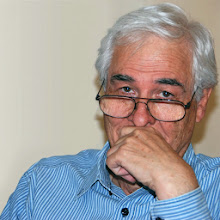

Speaking Aloud III
The Price You Pay
Speaking one’s mind has never been free of consequences. Every
honest sentence risks disturbing the tacit arrangements by which we remain
accepted: peace in the family, loyalty in the group, convenience in
professional relations, trust in friendship, and reputation in wider social
circles. Society often praises truthful courage in the abstract but punishes it
in practice. The person who speaks out may not be attacked openly; they may
simply be left out, cooled down, avoided, or quietly reclassified as
"difficult."
Yet silence also comes at a price. It protects belonging,
but does so at the expense of integrity. Little by little, one learns not only
to hide what one thinks but also to doubt the legitimacy of thinking it at all.
In that sense, the social cost of speaking out may be heavy, but the inner cost
of permanent silence may be even heavier. What is preserved socially may be
lost internally as well. A person may seek the approval of others while slowly
abandoning their own clarity of thought. The inner price of silence can be
self-censorship, resentment, shame, and the corrosive feeling of having
collaborated with something one knows is false, untrue, or fraudulent.
Silence can also make the person who speaks out feel
exposed, isolated, and even foolish for having trusted the group enough to be
honest with them. This is a lonely place. It does not breed anger as much as
sadness because a group that values honesty also needs some measure of shared
courage. Otherwise, silence begins to function as a form of quiet consent.
What I found most painful in my own experience was not
that one person reacted strongly against my views. I could understand that, in
itself; people disagree, sometimes sharply. What hurt more was the silence of
the others—especially those who, privately or indirectly, had let me know that
they shared my concerns. The cost of speaking one's mind is not paid only in
open disagreement, but in abandonment—in the quiet withdrawal of those who
choose the safety of belonging over solidarity with a dissenting opinion.
This experience is old enough to have been written into
the foundations of Western drama literature. Long before our modern language of
conformity and social pressure, Sophocles gave this loneliness a human face in Antigone.
Antigone
is a young woman who defies King Creon after
he forbids the burial of her brother, whom the state considers a traitor. For
her, the issue is not politics but conscience: the dead deserve dignity, and no
ruler has the moral authority to erase that duty. What makes the tragedy so enduringly
relevant is that Antigone is not simply opposed by Creon; she is surrounded by
a citizenry who understand her position but are terrified to say so. She tells
Creon that others would praise her action if their lips were not “sealed by
fear.” When Creon insists that she stands alone, she answers that others share
her view, but that they “curb their tongues” before him. Her isolation comes
not only from the ruler’s anger but also from the silence of those who know
better and remain quiet.
Yet, as discomforting as this isolation is, there is a
vital silver lining to it. Once the price of speaking out is paid, everything
becomes clear. You discover that belonging is valuable, but never at the
expense of your integrity.
The silence of others may make the immediate burden
heavier, but it also reveals why the price was worth paying. The cost is real,
but so is the dignity gained by refusing to let fear decide what can be said. Ultimately,
the deeper question is not whether speaking your mind has a cost, but which
cost we are more willing to live with: the social discomfort of being honest or
the private erosion of remaining silent?
This is the dilemma Daniel
Ellsberg faced when he chose to release the Pentagon Papers and Václav Havel
faced when he helped give voice to Charter 77 in communist Czechoslovakia. A clearer example is Émile Zola, who
published “J’Accuse” in defense of Alfred Dreyfus. Silence would have protected
their comfort, reputation, and safety; instead, like many others, they faced
exposure, prosecution, exile, or imprisonment for choosing to voice the truth
over the quieter private complicity.

I do not
compare my stance to theirs in terms of scale or consequence. However, the
moral structure is recognizable: remaining silent may preserve peace with
others, while speaking out may preserve peace with oneself.
Very recently, an email from the wife
of a friend who obviously did not have the courage to send it himself, said in
part:
“Distorting history is the favorite
recourse of the ignorant; therefore, it is useless to try to show you the
truth. Antisemitism and hatred will never help you see reality. (…) Albert, I regret having invited you to my house some years ago. If I
had known what you think about Israel and about us, Jews, that would never have
happened.”
She was reacting to a comment I made on an erroneous and biased article
by a well-known politician. There I wrote: “History shows, however, that since
its inception, the goal of Jewish Zionism was to eradicate Arab and Palestinian
populations to pave the way for the establishment of “Greater Israel” by taking
over all of Palestine (the West Bank and Gaza), Jordan, and significant parts
of Lebanon, Syria, Iraq, Saudi Arabia, and Egypt (the Sinai). Yes, you read
that right: “part of Iraq” That was the vision proposed by Ze'ev Jabotinsky in
his articles and speeches during the 1920s, explicitly formulated in his 1925 Revisionist
Zionist Movement. This occurred no less than 60 years before the founding of
Hamas and 100 years before the 2023 Hamas terrorist attack against Israel. From
the founder of political Zionism, Theodor Herzl, to the founder of the State of
Israel and its first Prime Minister, David Ben-Gurion, almost all Zionist
leaders adopted the notion of some form of “transfer”—a euphemism for “ethnic
cleansing”—with variations in the modality and practicality of such transfers.
“We must expel the Arabs and take their place...” —declared David
Ben-Gurion,—“and if we must use force... then we have that force at our
disposal.”
Contemporary authoritative
organizations and scholars concur that Israel’s actions against the Palestinian
nation constitute genocide. The International Association of Genocide Scholars
(IAGS) approved a resolution formally declaring that Israel's military campaign
and policies in Gaza met the legal definition of genocide. Passed with the
support of 86% of voting members, the resolution cited deliberate attacks on
civilians, forced displacement, and mass starvation as actions satisfying the
criteria outlined in the 1948 UN Genocide Convention.
The Special
Rapporteur on the Situation of Human Rights in the Palestinian Territories
stated, “Gaza Genocide: a collective crime.”
Professor Berdal Aral wrote “Israel’s Fateful March: From Settler Colonialism to
Genocidal State”
I paid the price; now I
choose to say aloud that Sionist Israel is a Genocidal State, and its leader
Benjamin Netanyahu is a war criminal.
https://vimeo.com/1122571688?fl=pl&fe=sh